


Executive producers Julie Weitz and Rene Echevarria set out to do something ambitious: adapt the Bible for mainstream television without dialing down the hard parts or turning Scripture into inspirational messages.
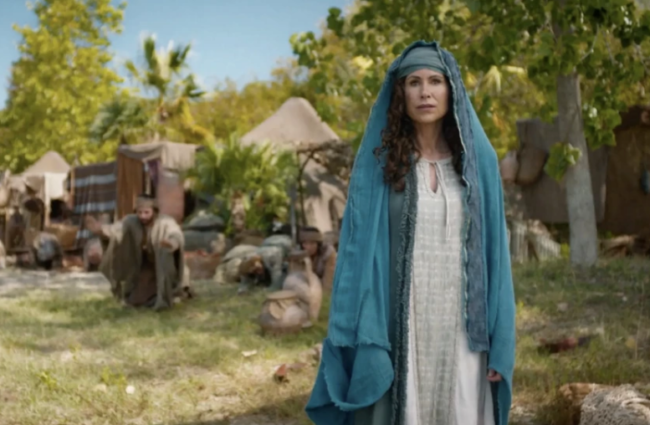
Their answer is “The Faithful: Women of the Bible,” a limited-run FOX series that retells Genesis through five women whose lives remain relevant today: Sarah, her servant Hagar, Sarah’s great-niece Rebekah, and sisters Leah and Rachel.
During a panel discussion with reporters, Weitz, a former TNT head of programming and longtime talent executive, and Echevarria, a veteran writer-producer whose credits include “Carnival Row” and “The 4400,” said they wanted to tell some of the world’s most familiar stories from a perspective they believe the entertainment industry has largely overlooked.
“We had this epiphany that there’s a point of view that has not been really looked at,” Weitz said. “Which were the women and how they were essential to the stories that most people know about: Abraham, Isaac, Jacob.”
Weitz said the approach let the series avoid some of the expected beats of biblical stories, like battles, rescues and other “men folk doing men’s stuff,” as Echevarria put it, and instead build each episode around an internal journey.
In the first installment, Weitz said, Sarah’s story becomes “a journey of faith,” while Hagar’s becomes “a journey of freedom,” tied together by the theme of surrogacy.
“It’s a fairly modern story about a pledge, a deal between two women about a child,” Weitz said, describing their research into both the ancient context and contemporary parallels.
Echevarria, who is outspoken about his own Christian faith, said the writers adopted a rule: When Scripture states something plainly, it becomes the nonnegotiable roadmap. When it doesn’t, television requires some creative liberties, but not contradiction.
“If it is expressly stated in the Bible, that is our roadmap,” Weitz said. “Where it’s not, we obviously have to imagine a bit. This is television.”
To help “keep us honest,” as one moderator framed it, the producers said they consulted outside advisors, including theologian Russell Moore and Rabbi Wendy Zierler, a professor whose scholarship includes biblical women’s studies.
Echevarria said the conversations were especially useful for grounding the drama in what daily life would have been like in the ancient Near East. The series was filmed on location in Rome and Matera.
“One of the things that first leapt out at me … is that it would have been perfectly normal and ordinary and expected for Abraham … to have taken a second wife,” Echevarria said. “But he never did.”
That kind of contextual work, he said, helped the writers frame Sarah and Abraham’s marriage as unusual even in its own time. It also, he said, helped the show portray Sarah’s faith as both courageous and conflicted.
According to Echevarria, the title “The Faithful” is meant to broaden, not narrow, what “faith” looks like on screen. Genesis, he noted, includes doubt, impatience and human grasping alongside obedience.
“These women are remembered for their great faith,” he said. “But it was a journey.”
Weitz said each woman’s story carries real consequences both for families and history. The Genesis narratives, she said, are “the beginning,” and their reverberations are still felt in the modern world.
“They really were the genesis of the three largest religions of all time,” Weitz said, referring to the shared roots claimed by Judaism, Christianity and Islam.
The producers also described an intensive commitment to making the world on screen feel physical and historically grounded. Most sets, Weitz said, were built outdoors rather than on soundstages, with only limited use of existing backlot structures.
“Everything was built from the ground up from dirt,” she said.
Echevarria pointed to Italy’s long tradition of historic period productions and said the crew’s expertise showed up in small, telling details like pottery, tools, textures that viewers might not consciously register but can “spot” if they feel fake.
“There’s a wealth of really accurate detail … to ordinary life in those days,” he said.
Weitz said the scale of the task drew unusual buy-in across departments.
“Everybody down to the sound department — the grips, the electric — people became so part of it every day,” she said.
Both pointed to a shifting marketplace that has made faith-forward storytelling more viable in mainstream distribution, citing the success of “The Chosen” and the broader rise of biblical and values-driven programming. Echevarria said those projects helped prove demand beyond niche audiences.
“The fact that it’s even possible to have the conversation … is only made possible because of the success of ‘The Chosen,’” he said, adding that it helped show broadcasters “there’s a hunger out there for these stories.”
Weitz said she initially worried FOX would never greenlight a Bible series, then watched in surprise as executives quickly embraced the pitch.
“We were being very precious about this baby,” she said. “Nobody was more surprised than myself.”
For Echevarria, one of the most validating moments came away from the set: watching an early cut with his pastor and wife.
“I was nervous,” he said, wondering how faith-minded viewers might respond to dramatized choices necessary for television. But any concerns raised, he said, were more about cultural plausibility than theology.
Weitz, who said she grew up immersed in Scripture study, described the project as personal in a different way: bringing to life women she feels she has “known” for years, and doing so in a way that could resonate across belief systems.
Read the complete article on Christianpost.com
READ MORE ARTICLES:

- G.L.O GOD’S LOVE ONLY RELEASES “STOP PLAYING CHURCH” TO CHRISTIAN RADIO
- New Family Group Psalm 101: A Fresh Voice Bridging Faith and Culture Through Music
- New FOX Series ‘The Faithful’ based on biblical women takes on Genesis without softening Scripture
- The Late Norman Hutchins Jumps 33 spots at Radio After being featured on American Idol
- Nigerian Churches Come Together to Equip Leaders in Crisis Zones